
Vaccines Can Save Us from COVID But Will They Leave Us More Vulnerable?
Leveraging Behavior to Boost Technology*

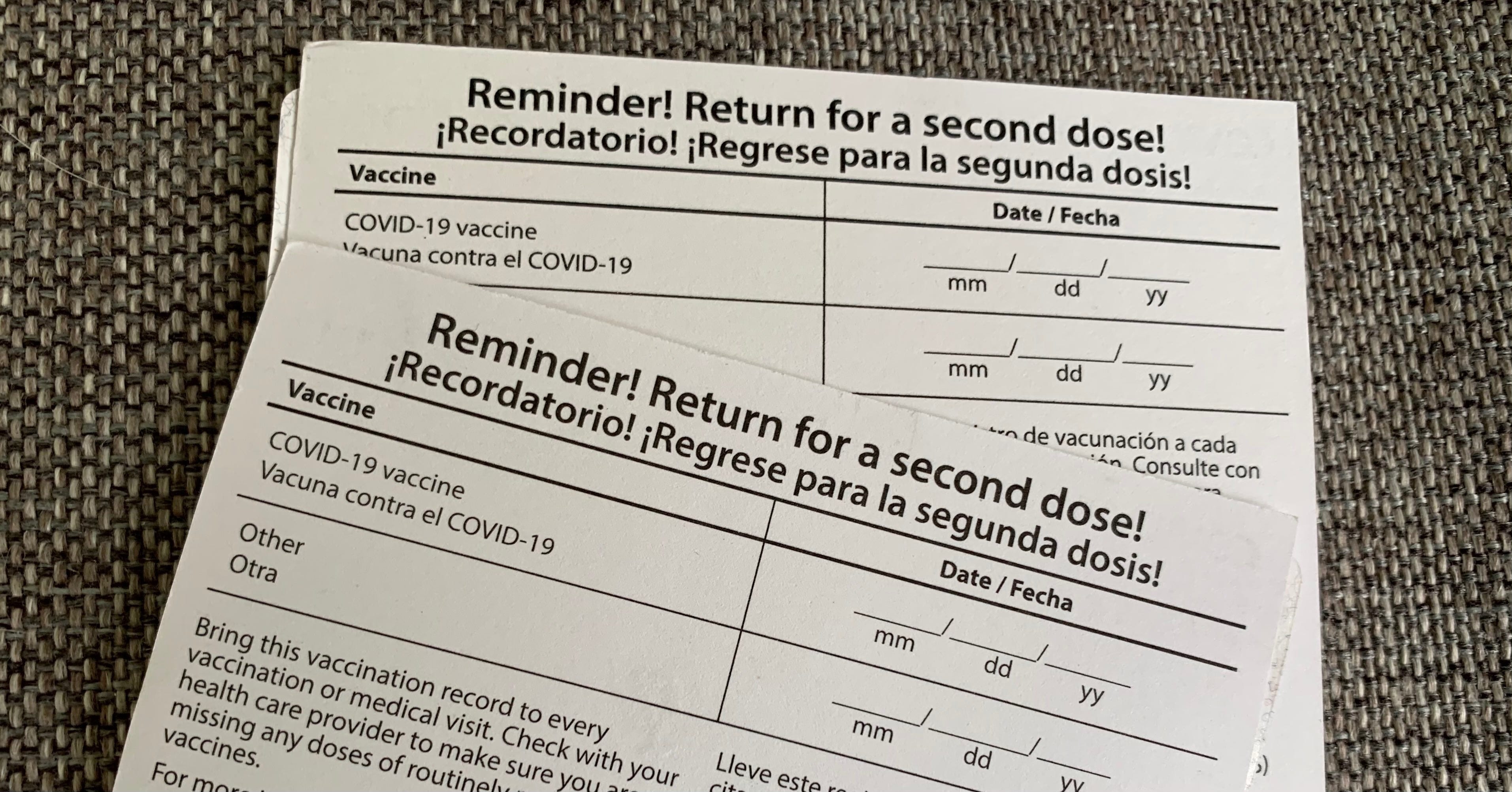
With COVID ostensibly on the run from a growing number of new vaccines, this is a moment to celebrate innovative anti-viral technologies if not necessarily how we might behave against the threat of another contagion.
The paradox is that while the scientific calvary has arrived in the nick of time, hopefully, to defeat this pandemic; it may make us more vulnerable in the long run.
Instead of building up what was clearly an inadequate public health response to COVID, we could come to rely more and more on test tube wizardry as the solution. No doubt next time is coming and there’s no guarantee we’ll have another miracle vaccine.
Nor is it clear that the errors plaguing the U.S. response to COVID—ignoring early warnings, inadequately stockpiling personal protective equipment, flawed testing and conflicted messaging among federal officials about the dangers of the disease—will be remedied anytime soon. After all, even though we had 100 years to prepare for COVID, America wasn’t ready. While there are hopeful signs of change in the Biden Administration, ultimately, there was no plan to control the COVID onslaught and the result was catastrophic.
Is Science the Savior?
Vaccines, then, became the salvation; scientists were exalted and rightly so for their achievements.
A new commentary in the New England Journal of Medicine chronicled two centuries of progress against infectious diseases from Edward Jenner’s smallpox vaccine to present day advances but with a caveat:
“The SARS-CoV-2 pandemic will be an important test of whether these new platforms can fulfill their promise of creating safe, effective, and scalable vaccines more quickly than traditional methods. If they pass this test, the next task will be to accomplish equitable, efficient vaccine distribution — which would represent an even greater achievement,” [Emphasis Added] writes Angela Desmond.
Desmond’s gently phrased admonition about equal access to technology’s benefits raises important questions about the relationship between science and public health policy. If policies are derived from political imperatives, particularly in the face of the most virulent microbe in a century, it would be easy to misapply the lessons of history in terms of the relative importance of research versus behavioral change.
The Limits of a Medical Magic Bullet
The appeal of COVID vaccines is that they are a “magic bullet” striking the virus on its spike protein—at once the dagger to enter a naïve cell but an also an Achilles Heel in that it can be blunted by an elegant tweak to our immune system.
After being hermetically sealed in our homes for a year or forced into the viral war zone as an essential worker, we want to declare victory and pop the cork. Certainly, the spotlight is on preventing COVID, as it should be, but as brilliant as vaccine science has become it has missed some pretty big historical targets.
Currently in terms of a single pathogen, TB is the world’s number one infectious disease killer claiming 1.4 million lives a year, according to the World Health Organization. While there is a vaccine, its effectiveness is limited.
According to the Centers for Disease Control, malaria killed more than 400,000 people in 2019—most of them children in Sub-Saharan Africa. There are promising vaccine candidates including one that would inject a killed version of the parasitic vector, but it is still in development.
As banal as it sounds, there is no vaccine for the common cold, though it is certainly a persistent menace that can lead to more serious infections. While we do have a vaccine to meet the annual threat of influenza it’s only 40 to 60 percent effective, according to the CDC. This preventive cocktail is constantly updated by experts who assess the likelihood the certain strains are likely to predominate in a given season. Sometimes the match is better than others and influenza and its complications kill some 30,000 Americans annually.
However, this year the flu epidemic was just a fraction of normal and, according to a release by the Harvard T.H. Chan School of Public Health, behavioral changes like mask wearing and social distancing are thought to be the primary reasons.
After investing $14.5-billion from 2000 to 2018, an article in the Washington Post states we have been unable to prevent infection from HIV/AIDS. Statistics from UNAIDS show approximately 690,000 people died from the disease in 2019—down dramatically from nearly 2 million in 2010 but still a terrible toll.
Admittedly, since the AIDS virus targets the immune system muting a vigorous response, the disease poses a special challenge. Nonetheless, trials continue here in the U.S., in Thailand and Africa, Latin America and Europe— so far without a meaningful result nearly 40 years after the virus was discovered.
Thus, it seems unlikely that vaccines will eventually be available to prevent every present-day infectious disease let alone unknown biological threats that will inevitably emerge in the future.
Emphasizing Infectious Versus Chronic Disease
While we are rightly preoccupied with the mortal threat of microbial infection it hasn’t always been the case. In fact, until HIV/AIDS became a scourge in the 1980’s the public health spotlight was largely focused on preventing chronic disease.
In one of the most widely reported erroneous quotes, Williams Stewart, U.S. Surgeon General from 1965 to 1969 reportedly said, “It is time to close the book on infectious diseases, and declare the war against pestilence won.”
The problem is he never said it, or there’s no record of his saying it. However, the remark was an indicator of public health thinking at the time.
“In the aftermath of the astonishing power of antibiotics, by the 1960s the US Public Health Service was shifting its attention away from acute infections to chronic illnesses,” writes Brad Spielberg in the journal Infectious Diseases of Poverty.
Spielberg continues: “For example, a government report published in 1968, which bears Dr. Stewart’s name on the title page, contained the following passage:
‘It is also recognized that, although major tasks still remain in the improvement of control over the infectious diseases…the identification of cigarette smoking as the major cause of this century’s epidemic of lung cancer…[and] chronic diseases…now constitute the predominant health problems in this country.’ “
That kind of thinking was apparent in the Food and Drug Administration’s efforts to regulate smoking as a “pediatric disease” under Commissioner David Kessler’s stewardship during the Clinton Administration. COVID notwithstanding, tobacco use is the leading cause of preventable deaths in the U.S., killing nearly 500,000 people a year, according to the CDC.
It’s estimated that as many as eight million lives have been saved as a result of tobacco cessation efforts during the last fifty years--in other words, changes in behavior driven by attitudes that reflect a better understanding of public health and the limits of science.
Rethinking Public Health Behaviors
To underscore Dr. Desmond’s original point, we must have the commitment and the infrastructure to deliver preventives to the arms where they’re critically needed. Yet there is a yawning gap between the laboratory and the real world.
The bridge must be communication. Behaviors need to change so that vaccines along with lower tech approaches can do their job. If one-third of the public doesn’t believe COVID vaccines work, that isn’t a technical challenge, it’s a matter of persuasion not much different than convincing people to give up cigarettes, lose weight, exercise more and drink less alcohol—what experts call achieving “health literacy.”
Yet anti-vaccine sentiment is exploding on the internet. A new piece in The Economist, notes that some 425 accounts on major social media platforms carrying anti-vaccine messages have attracted more than 52 million followers. Their success is another indicator that in the current polarized environment it’s easier to peddle falsehoods than sustain facts. All the more so when perpetrators of these narratives are selling bogus treatments.
The Good News and the Bad News
Generally speaking, people don’t like to hear bad news and public health officials are often viewed as contemporary Cassandras. However, the upside is that a modest change in behavior can generate spectacular results. If we can overcome vaccine skepticism fueled by disinformation, and roll up our sleeves for a life-saving shot, the needle stick shouldn’t hurt that much. That could open minds toward other obvious but powerful opportunities to enhance health and save lives— a transformation that would make next time markedly different from the current failures.
Perhaps this might not be as difficult as it sounds. Last year British scientists published a study in the journal Nature about the best way to combat the “infodemic” of fake news about the pandemic.
Using predictive models, the researchers observed the effects of accurate and inaccurate reports on how people made health-related choices. Not surprisingly, fake news had negative consequences. However, if the balance between real and fake information were tilted even slightly toward the truth, there was a likelihood people would make better decisions. In effect, truth is an inoculation against lies and dis-information.
Someday we may be able to immunize people against anti-scientific prejudice. Until then we need to encourage behaviors that support high science rather than undermine its heroic successes. As gifted as they are, researchers need us as partners who can be counted on to behave responsibly, making sacrifices so our communities are better able to stay safe and healthy. Only then will these breakthroughs achieve their true potential when they’re desperately needed.
A select few have the genius to invent vaccines but everyone can make a contribution that, in its own way, is just as meaningful—if they only will.
*With special thanks to Michael Radetsky, MD for his review and comments.
-0-